
300-hour Advanced yoga Teacher Training
Yoga Alliance Credited
With lead trainers Sarah Emilie Boas, Nicolai Boas, Cédric Gorinas, Leah Wrobel & Guests
Our 300-hour Advanced Yoga Teacher Training is designed for teachers who want to deepen their knowledge, refine their teaching, and develop the skills to confidently teach advanced yoga in a wide range of settings.
Primarily taught by Nicolai Boas, Cédric Gorinas, Sarah Emilie Boas & Leah Wrobel the training explores advanced biomechanics and physiological understanding, asana technique, sequencing, breathwork and meditation, alongside an in-depth exploration of applied yoga philosophy, trauma informed practice and self-study.
A strong focus is placed on teaching methodology, teaching technique, mentoring, personal growth and shadow work. We develop the practical skills needed to design and teach advanced yoga classes, private sessions, events and retreats, while exploring how to communicate effectively, make informed teaching choices, and adapt your approach to specific groups and individual needs. Alongside developing teaching skills, the training offers space for deeper self-inquiry, personal development and embodied exploration.
The training also introduces the foundations of Ayurveda and yoga therapy, while special guest teachers are invited to share their expertise and offer additional perspectives from within and beyond the traditional yoga framework.
This is a training for teachers ready to go deeper - not only into the practice of yoga, but into the craft, responsibility and creativity of teaching it.
Who can join?
This training is for yoga teachers who already have a foundational understanding of yoga and are ready to deepen their knowledge, teaching skills and personal practice. To join, you should have completed a Yoga Alliance–certified foundational teacher training or an equivalent education, and preferably have some experience teaching basic yoga classes.
You do not need to belong to a particular yoga tradition or teaching style, nor do you need to have an advanced or highly physical personal practice. What matters is a genuine curiosity to explore yoga more deeply, develop your understanding of the body, mind and practice, and grow as a teacher.
The training is suitable for teachers looking to expand their teaching beyond the basics, develop greater confidence and precision, and explore how to work with more advanced students, private clients, groups, events and retreats.
Module I
March 5th - 12th
Foundation Retreat
Lead by Nicolai Boas, Cédric Gorinas & Sarah Emilie Boas
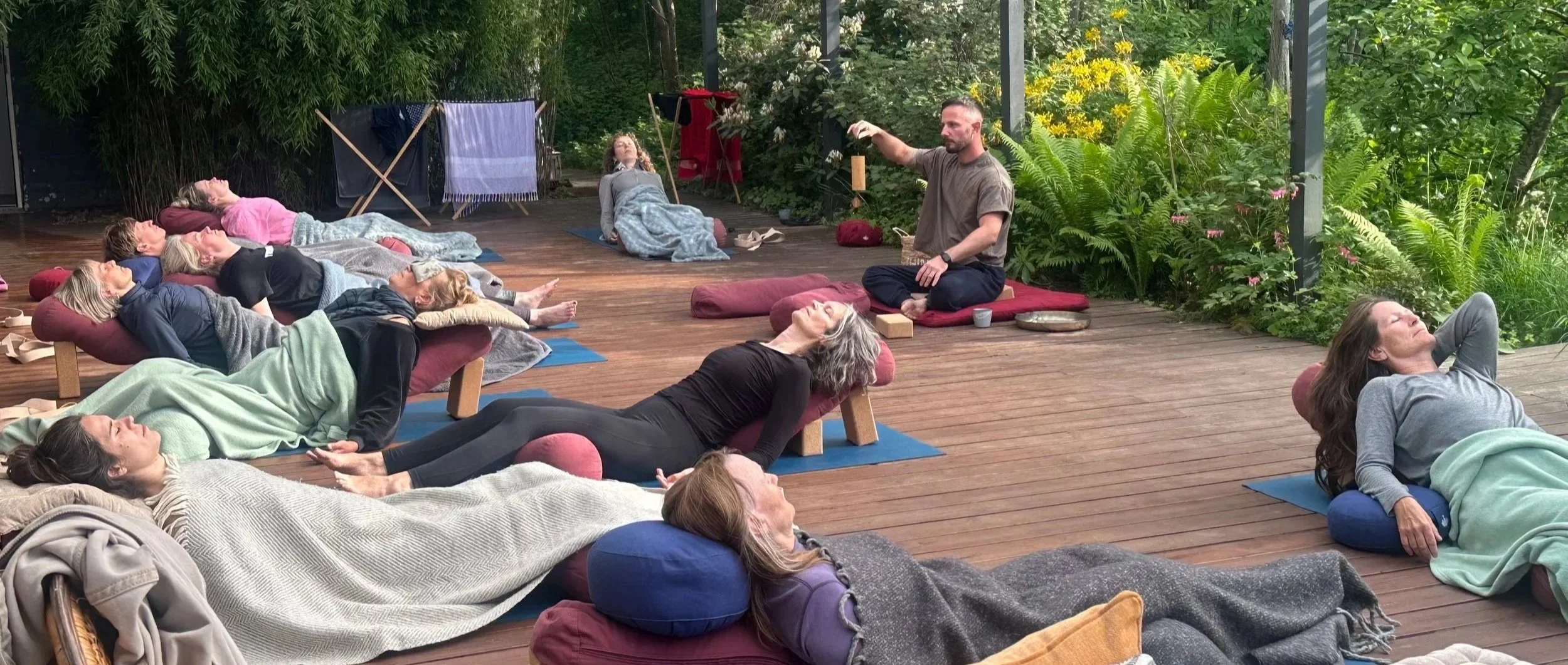
The 300-hour Teacher Training begins with a seven-day residential retreat in Gudmindrup. This immersive week brings the group together and establishes the foundation for the training year ahead.
We know that participants will arrive with different backgrounds, teaching experience and approaches to yoga. The retreat is therefore an opportunity to create a shared foundation and develop a common language and understanding that we can build upon throughout the training.
Through daily practice, lectures, workshops, teaching exercises, group discussions and reflection, we will deepen both theoretical knowledge and practical teaching skills. At the same time, the retreat invites you to look more closely at who you are as a teacher, how you communicate and what you want your teaching to offer.
What we will explore
Yoga Philosophy - go beyond an introductory understanding of yoga philosophy and explore key philosophical concepts and texts. We will consider how traditional teachings can be understood, questioned and applied within contemporary yoga, and how philosophy can become something lived and embodied rather than simply studied.
Meditation & Breathwork - Establishing a Daily Practice - establish a strong and consistent meditation, pranayama and breathwork practice that can continue throughout the training and beyond. The focus in this module is on practice, consistency and personal experience, creating a foundation before exploring the theory and teaching methodology in greater depth later in the training.
Asana & Movement Technique - refine your understanding of asana through practice, observation and exploration. We will investigate anatomy, movement principles, individual variation and adaptation, moving beyond the idea of one “correct” expression of a pose and towards understanding what you are teaching, why you are teaching it and how it can be adapted to the person in front of you.
Teaching Technique & Methodology - develop greater clarity, confidence and independence in how you teach. We will work with sequencing, cueing, observation, demonstrations, transitions, modifications and class architecture, with opportunities to practise, experiment and receive feedback.
Voice, Language & Communication (Guest Teacher) - explore your voice as one of your most important teaching tools. With a specialist guest teacher, we will work practically with tone, rhythm, volume, articulation, silence and presence, helping you develop a teaching voice that is clear, engaging, sustainable and authentically your own.
Ayurveda (Guest Teacher) - explore the fundamental principles of Ayurveda and its relationship to yoga with a specialist guest teacher. We will look at constitution, the doshas, seasons, daily rhythms and the concept of balance, with a focus on how these principles can inform both personal practice and teaching.
The Teacher Behind the Teaching - turn some of the attention towards who you are as a teacher. Through reflection, discussion and practical exercises, we will explore habits, strengths, assumptions and patterns, alongside questions of authenticity, confidence, boundaries, responsibility and what it means to hold space for others.
The Residential Experience
Most importantly, the retreat creates the shared foundation for the rest of the 300-hour training: a common language, a deeper understanding of the work ahead and a community of fellow teachers with whom you will continue the journey. The retreat is also an important part of building the training community.
Spending seven days living, practising, studying and sharing meals together gives us the time to get to know one another, build trust and create the supportive learning environment that will carry through the rest of the year.
The retreat is a full immersion, with a full programme of teaching, practice and study each day.
The residential stay is all-inclusive, including accommodation, meals and the complete retreat programme.
Beginning: Friday the 5th — check-in between 13:00–15:00
End: Friday the 12th — concluding at approximately 13:00
Module II
April 2nd, 3rd & 4th, April 23rd, 24th & 25th
Yoga Technique & Applied Physiology and Anatomy
Lead by Nicolai Boas
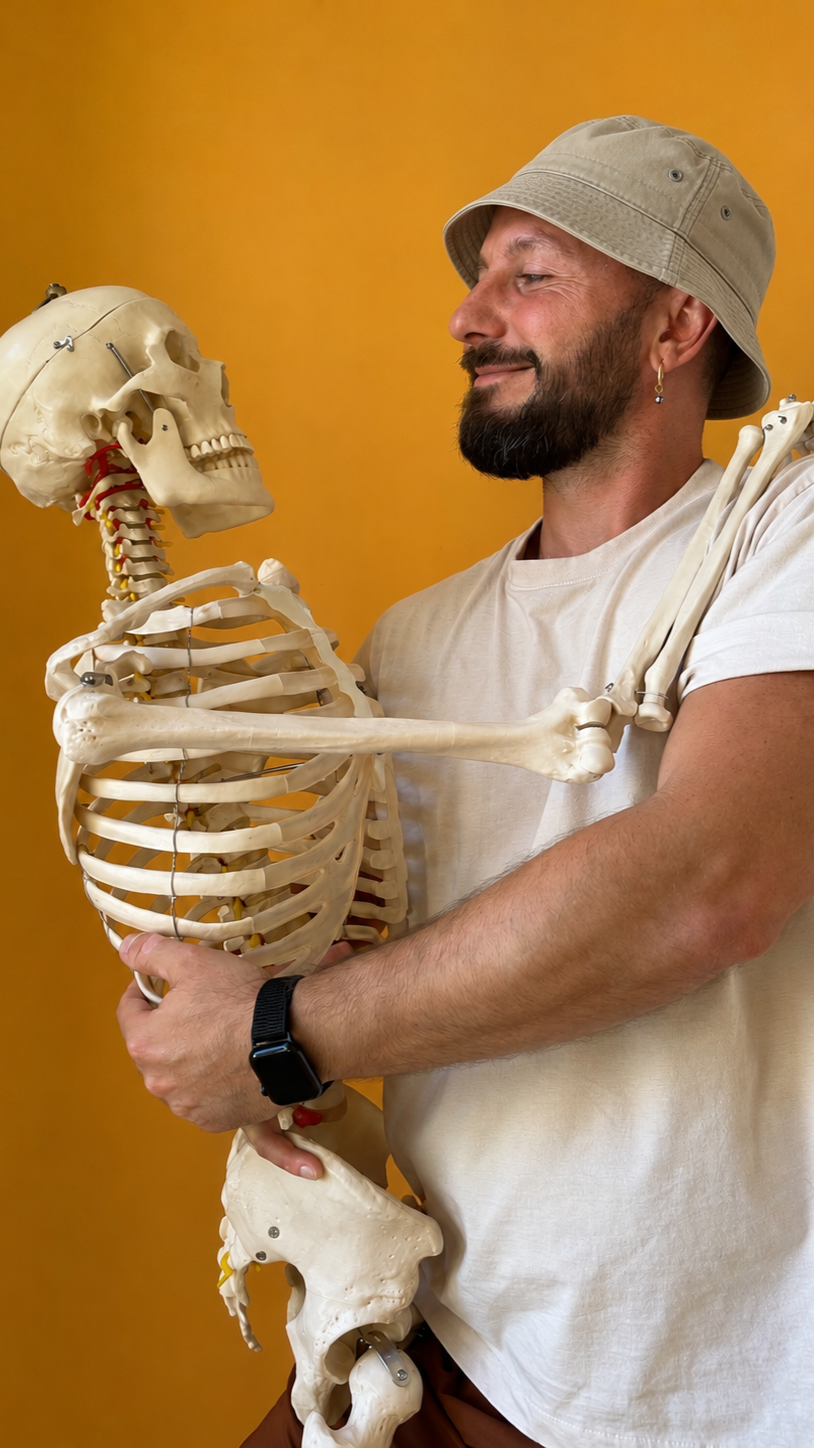
This module is designed to deepen your understanding of anatomy and physiology in relation to yoga, while developing your ability to apply this knowledge in a practical teaching context.
We will explore the body and its systems in greater depth, building on the anatomical foundations of a basic teacher training and developing a more nuanced understanding of movement, biomechanics, physiology and individual variation.
A central focus is learning how to translate this understanding into teaching: how we can observe and work with different bodies, adapt techniques and approaches, and make informed choices depending on the individual, the group and the style or intensity of practice being taught.
The aim is not simply to know more about anatomy, but to develop the tools and confidence to use anatomical and physiological understanding as an integral part of intelligent, adaptable and inclusive teaching.
What we will explore
Anatomy & physiology in greater depth - building on the foundations of your previous teacher training and developing a more detailed understanding of the body and its systems.
Movement & biomechanics - developing a deeper understanding of how the body moves and how this relates to yoga practice and teaching.
Individual variation - exploring how bodies differ and why the same technique, movement or approach may not work in the same way for everyone.
Observation - developing your ability to observe different bodies and use what you see to inform the choices you make as a teacher.
Adapting your teaching - learning to adjust techniques and approaches according to the individual or group in front of you.
Style & intensity of practice - exploring how your teaching choices may change depending on the style, context and intensity of the practice being taught.
Applying anatomy to teaching - moving beyond theoretical knowledge and learning how anatomy, physiology and biomechanics can support practical decision-making in your classes.
Intelligent & inclusive teaching - developing greater confidence in making informed choices that allow you to teach different bodies and individuals with greater adaptability.
What you will take away
By the end of the module, you will have developed a deeper and more nuanced understanding of anatomy, physiology, movement and biomechanics in relation to yoga.
More importantly, you will have strengthened your ability to translate this knowledge into your teaching — observing the people in front of you, adapting your approach and making more informed choices according to the individual, the group and the practice you are teaching.
The intention is not to give you more anatomical information simply for the sake of knowing it, but to help you become a more confident, intelligent and adaptable teacher.
Practical Information
The module takes place over two weekends at our Vesterbro studio, with a full programme of teaching, practice and study across all six days.
Schedule: Friday–Sunday, both weekends, 09:00–18:00.
Module III
May 14th-17th
Advanced Sequencing
Lead by Nicolai Boas
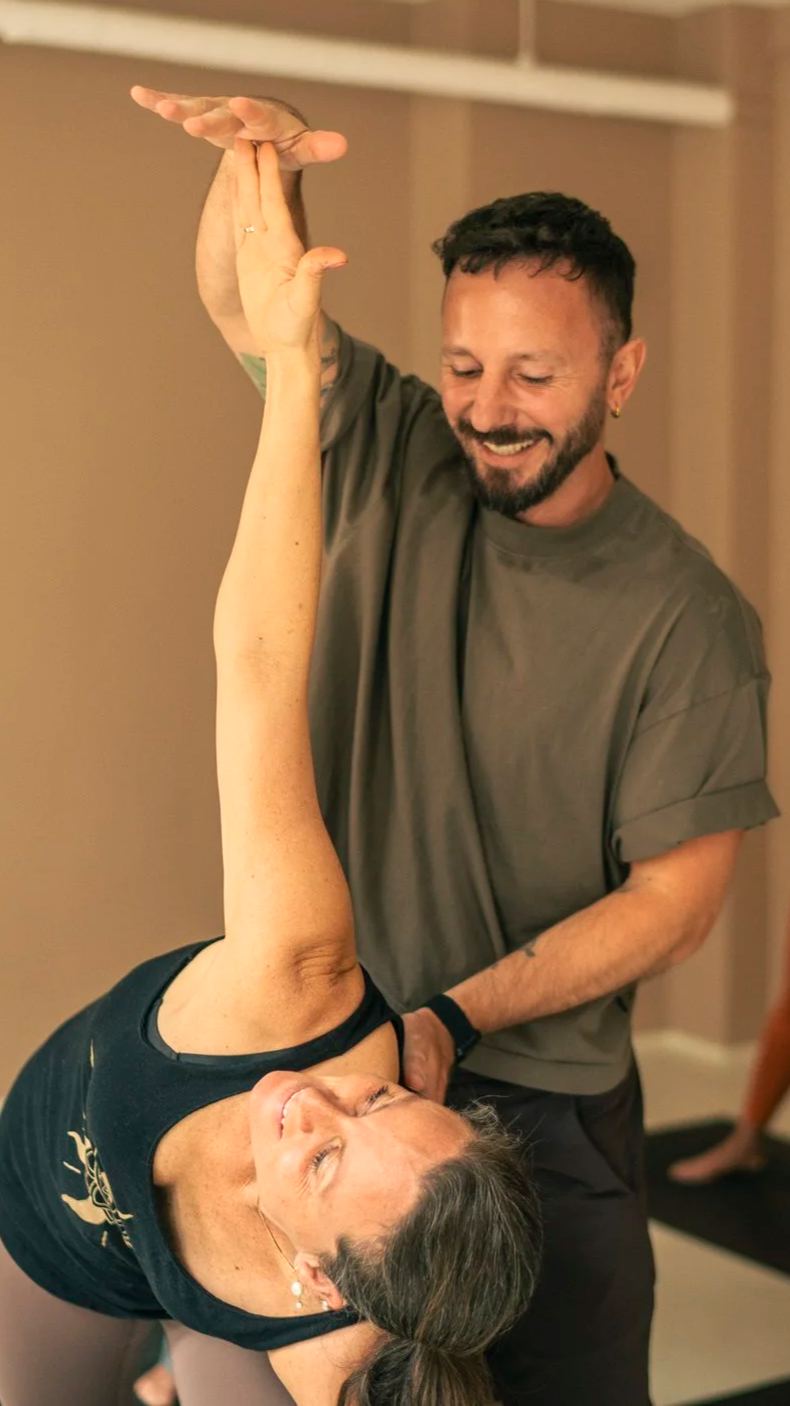
Over four days during the Pinse holiday, we will explore how to expand and refine your sequencing skills, developing greater creativity, adaptability and freedom in your teaching.
We will work with the principles behind creating thoughtful and engaging classes across different styles, themes and levels of practice. Rather than relying on fixed formulas or predetermined sequences, the focus will be on understanding how to build practices that have purpose, progression and coherence while still leaving room for creativity.
A central part of the module is developing the ability to teach more freely — to move beyond simply remembering a sequence and instead respond to the room, the students and the moment. Through exploration and practice, we will work towards greater confidence in making choices, adapting sequences and allowing the teaching to unfold more organically.
The aim is to give you both the tools and the freedom to create intelligent, creative and inspiring practices for a wide variety of students and contexts.
What we will explore
The principles of sequencing - developing a deeper understanding of what makes a sequence purposeful, progressive and coherent.
Creating classes across different styles - exploring how sequencing can be approached differently depending on the style of practice you are teaching.
Working with themes - learning how to create thoughtful and engaging classes around different themes while maintaining a clear and coherent practice.
Sequencing for different levels - developing your ability to create practices that respond to different levels of experience.
Creativity in sequencing - expanding your possibilities as a teacher and finding greater freedom beyond fixed formulas and predetermined sequences.
Purpose & progression - developing sequences in which the different elements of the practice connect and build upon one another with intention.
Adapting your sequence - strengthening your ability to make changes according to the students, the room and what is happening in the moment.
Teaching more freely - moving beyond the need to remember and reproduce a sequence and becoming more confident in making teaching choices as the class unfolds.
Responsive teaching - developing greater awareness of the people in front of you and allowing what you observe to inform how the practice develops.
What you will take away
By the end of the module, you will have a stronger understanding of the principles behind creating thoughtful, purposeful and engaging sequences across different styles, themes and levels of practice.
You will have developed greater confidence in creating and adapting your own sequences rather than relying on fixed formulas or predetermined structures.
Most importantly, the module is designed to give you greater freedom as a teacher: the ability to move beyond simply remembering what comes next and instead understand why it comes next - allowing you to make informed choices, respond to your students and let your teaching unfold more organically.
The intention is to give you both the tools and the confidence to create intelligent, creative and inspiring practices for a wide variety of students and teaching contexts.
Practical Information
The module takes place over four days during the Pinse holiday at our Vesterbro studio, with a full programme of teaching, practice and study each day.
Schedule: Four days, 09:00–18:00 each day.
Module IV
June 4th-6th
Trauma Informed Yoga
Lead by Leah Wrobel
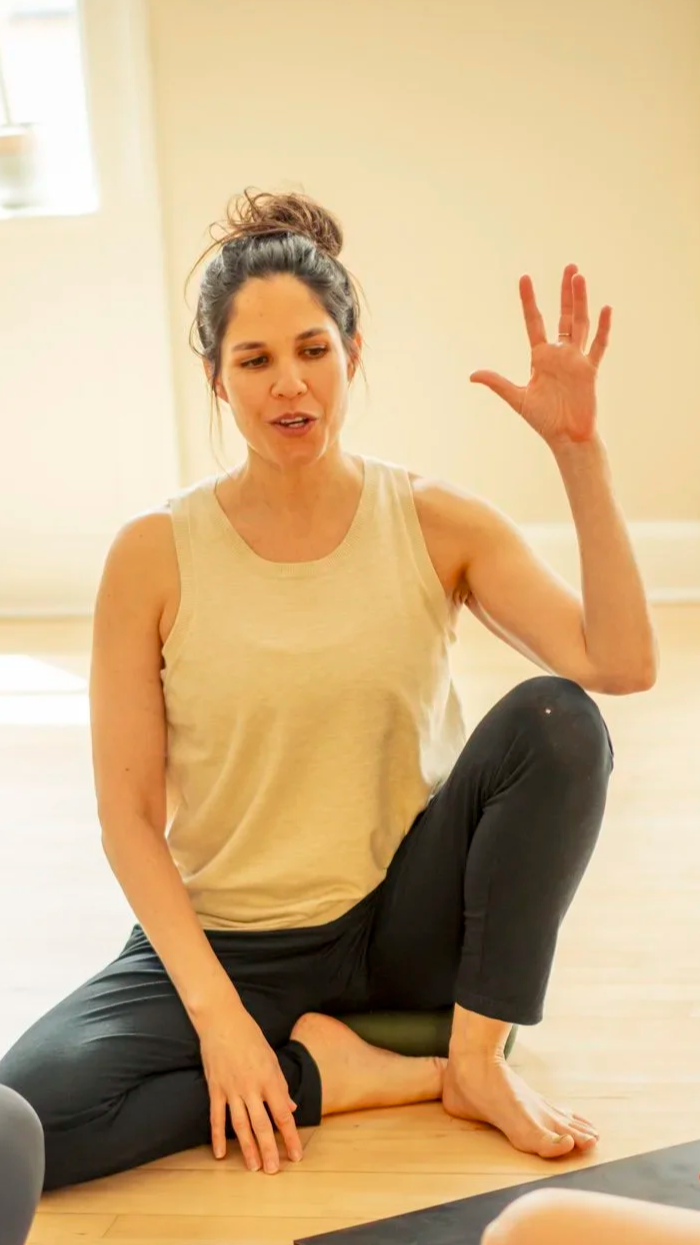
This module explores the principles and practices of trauma-informed yoga, inviting us to consider how an understanding of trauma can deepen and reshape the ways we teach, communicate and hold space for practice.
We will explore how trauma can shape our experience of the body, nervous system, emotions and our relationship to movement and the world around us, and how yoga can offer opportunities to cultivate safety, autonomy, choice and a renewed sense of connection with oneself — creating conditions that may support healing.
A central focus will be on developing greater sensitivity to the diverse needs and experiences students bring into the room, while cultivating greater awareness of our therapeutic presence and our capacity for compassion and attunement.
Importantly, the intention is not to turn yoga teachers into therapists, but to deepen your capacity to teach with greater awareness, empathy and discernment.
What we will explore
Understanding trauma - exploring how trauma can shape our experience of the body, nervous system, emotions, movement and the world around us.
Safety - exploring how yoga can offer opportunities to cultivate a greater sense of safety within practice.
Autonomy & choice - understanding the role of autonomy and choice and how these can be supported within a yoga practice.
Connection - exploring how yoga can offer opportunities to cultivate a renewed sense of connection with oneself.
Diverse needs & experiences - developing greater sensitivity to the different needs and experiences students may bring into the room.
Language - exploring how the language we use as teachers can influence the experience of practice.
Sequencing - considering sequencing through a trauma-informed perspective and how our choices can shape the experience we create.
Boundaries - developing greater awareness of boundaries within our teaching.
Thoughtful adaptations - exploring how adaptations and subtle shifts in our teaching can make a meaningful difference.
Therapeutic presence - cultivating greater awareness of our presence as teachers and our capacity for compassion and attunement.
Awareness, empathy & discernment - developing our capacity to bring these qualities more consciously into the way we teach and hold space.
What you will take away
By the end of the module, you will have a more nuanced understanding of how trauma can shape the experience of the body, nervous system, emotions, movement and the world around us.
You will have explored practical ways of bringing greater awareness to language, sequencing, boundaries, choice and adaptations within your teaching.
You will have developed greater sensitivity to the diverse needs and experiences students bring into the room, alongside greater awareness of your own presence and your capacity for compassion and attunement.
You will leave with practical tools and a deeper understanding of how to create yoga experiences that are safer, more accessible, inclusive and empowering.
Practical Information
The module takes place over three days at our Vesterbro studio, with a rich programme of teaching, embodied practice, reflection and study each day.
Schedule: Three days, 09:00–18:00 each day.
Module V
September 10th-12th & September 24th-26th
Meditation & Breathwork
Lead by Cédric Gorinas & Sarah Emilie Boas
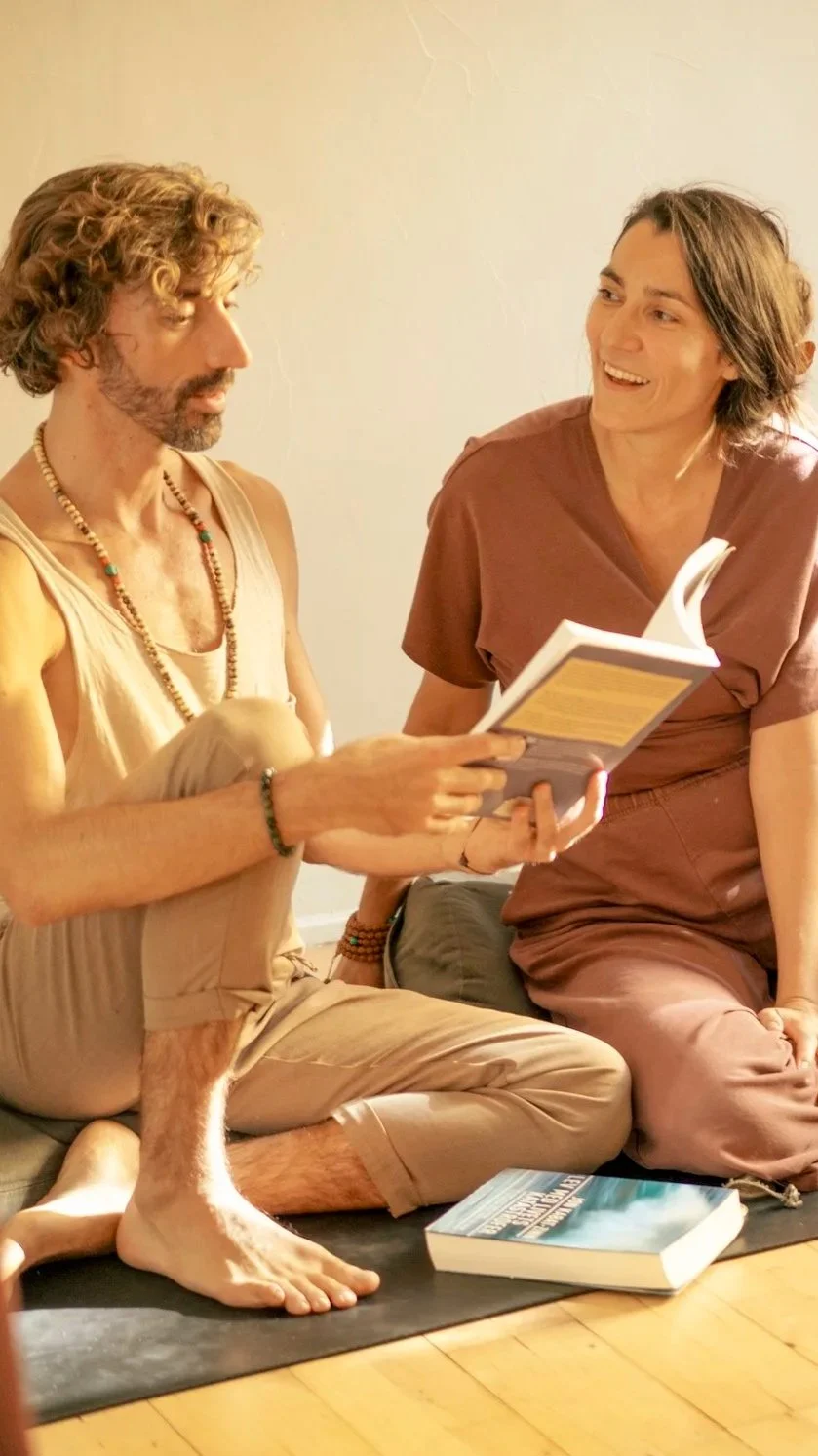
This two-weekend module offers a deeper exploration of breathwork and meditation, with a focus on developing both your personal practice and your ability to integrate these tools into teaching.
Through practice and theory, we will explore a range of breathwork practices and meditation techniques, looking at their effects on the body, nervous system and mind, as well as the principles behind working with them safely and effectively.
The intention is to move beyond simply learning techniques and towards a deeper, embodied understanding of breathwork and meditation. We will explore how these practices can become powerful tools for regulation, awareness, concentration and transformation, while developing the confidence and understanding to share them with others.
What we will explore
Breathwork practices - exploring a range of practices and developing a deeper understanding of their different effects.
Meditation techniques - experiencing and studying different approaches to meditation through both practice and theory.
Body, nervous system & mind - examining how breathwork and meditation can affect each of these and how this understanding can inform practice and teaching.
Regulation, awareness & concentration - exploring how breath and meditation can be used as tools to work with these different aspects of our experience.
Safe & effective practice - developing an understanding of the principles behind working with breathwork and meditation safely and effectively.
Adapting the practice - learning how to adapt breathwork and meditation to different students, needs and contexts.
Teaching breathwork & meditation - developing the understanding and confidence to integrate these practices into your teaching and share them with others.
What you will take away
By the end of the module, you will have developed a deeper and more embodied understanding of breathwork and meditation, moving beyond simply knowing a collection of techniques.
You will have expanded your own personal practice while developing a more nuanced understanding of how different practices can affect the body, nervous system and mind.
You will also have greater understanding of how to work with these practices safely and effectively, how to adapt them to different students and contexts, and greater confidence in integrating breathwork and meditation into your teaching.
Practical Information
The module takes place over two weekends at our Vesterbro studio, with a full programme of teaching, practice and study across all six days.
Schedule: Fridays 15:00–19:00, Saturdays and Sundays 09:00–18:00.
Module VI
October 25th-30th
Integration, Tradition & The Art of Teaching
Lead by Nicolai Boas, Cédric Gorinas & Sarah Emilie Boas
The final module runs from Monday to Saturday and brings the training together in a final week of practice, exploration and integration.
Throughout the week, we will return to advanced asana technique and teaching methodology while bringing together the knowledge, skills and perspectives developed across the training. The focus shifts towards integration: exploring how everything you have learned can become part of your own practice, your teaching and the way you want to develop as a teacher.
The week will also open the door to different dimensions of the yoga tradition. Alongside the core faculty, we will welcome a guest teacher to explore Bhakti Yoga, chanting and Hindu mythology, offering an opportunity to experience and learn from aspects of the yoga tradition that extend beyond the physical practice.
Drawing inspiration from different teachers, traditions and perspectives, the intention is not to arrive at one particular way of teaching yoga, but to give you space to bring together what you have learned, reflect on what resonates with you and continue developing your own approach to teaching.
What we will explore
Integration - bringing together the knowledge, tools and experiences from across the 300-hour training and exploring how they can become part of your own teaching and practice.
Advanced asana technique - continuing to refine and explore asana technique as part of the final week of practice and study.
Teaching methodology - returning to the craft of teaching and integrating the skills and understanding developed throughout the training.
Different approaches to practice - drawing inspiration from a variety of teachers, traditions and perspectives and exploring how these can broaden your understanding of yoga and teaching.
Bhakti Yoga, Chanting & Hindu Mythology - Guest Teacher - exploring Bhakti Yoga through chanting, stories and mythology from the Hindu tradition, offering another perspective on the wider tradition of yoga and an opportunity to experience aspects of yoga that extend beyond the physical practice.
Your teaching & practice - reflecting on how the different elements of the training resonate with you and how you want to carry them forward into your continued development as a teacher.
Bringing the Training Together
This final week is an opportunity to step back and look at your development across the training as a whole.
Rather than introducing another large area of study, the focus is on connecting what you have learned: bringing together technique, knowledge, practice and teaching experience and allowing these different elements to inform the teacher you are becoming.
The intention is for you to leave the training not with a fixed formula for how to teach, but with a broader foundation from which to make your own informed choices and continue developing your teaching beyond the training.
Final Examination
The week includes the final examination, providing an opportunity to demonstrate and reflect on the knowledge, skills and teaching abilities you have developed throughout the training.
The examination forms part of the process of bringing the training together and recognising the development that has taken place across the programme.
Graduation
We finish the week by celebrating the completion of the journey together with a graduation.
The graduation marks both the completion of the 300-hour training and the transition into what comes next: continuing to practise, explore and develop your own path as a teacher.
Practical Information
The sixth and final module takes place over six days at our Vesterbro studio, with a full programme of teaching, practice and study each day.
Schedule: Six days, 09:00–18:00 each day.
Investment & Registration
Full training price: 32.800 DKK ex moms (including moms for students above the age of 30 is 41.000 DKK)
Deposit (non-refundable): 5.000 DKK (deducted from total)
Payment plans available upon request
The price includes your full stay at Fyrregården during Module 1, with shared accommodation and three nourishing meals each day. It also covers all course and training materials throughout the programme, with additional reading recommendations for those who wish to deepen their exploration beyond the curriculum.
If unforeseen circumstances (e.g., a national lockdown) require cancellation, all payments will be refunded.
If you have any questions feel free to book a meeting or call one of the teachers.
Sarah Emilie: Sarah@yogaflat.com, phone: 28189208
Nicolai: Nicolai@yogaflat.com, phone: 20997494
Cédric: Cedric@heartwiseyoga.com, phone: 50477521
Meet the Lead Teachers
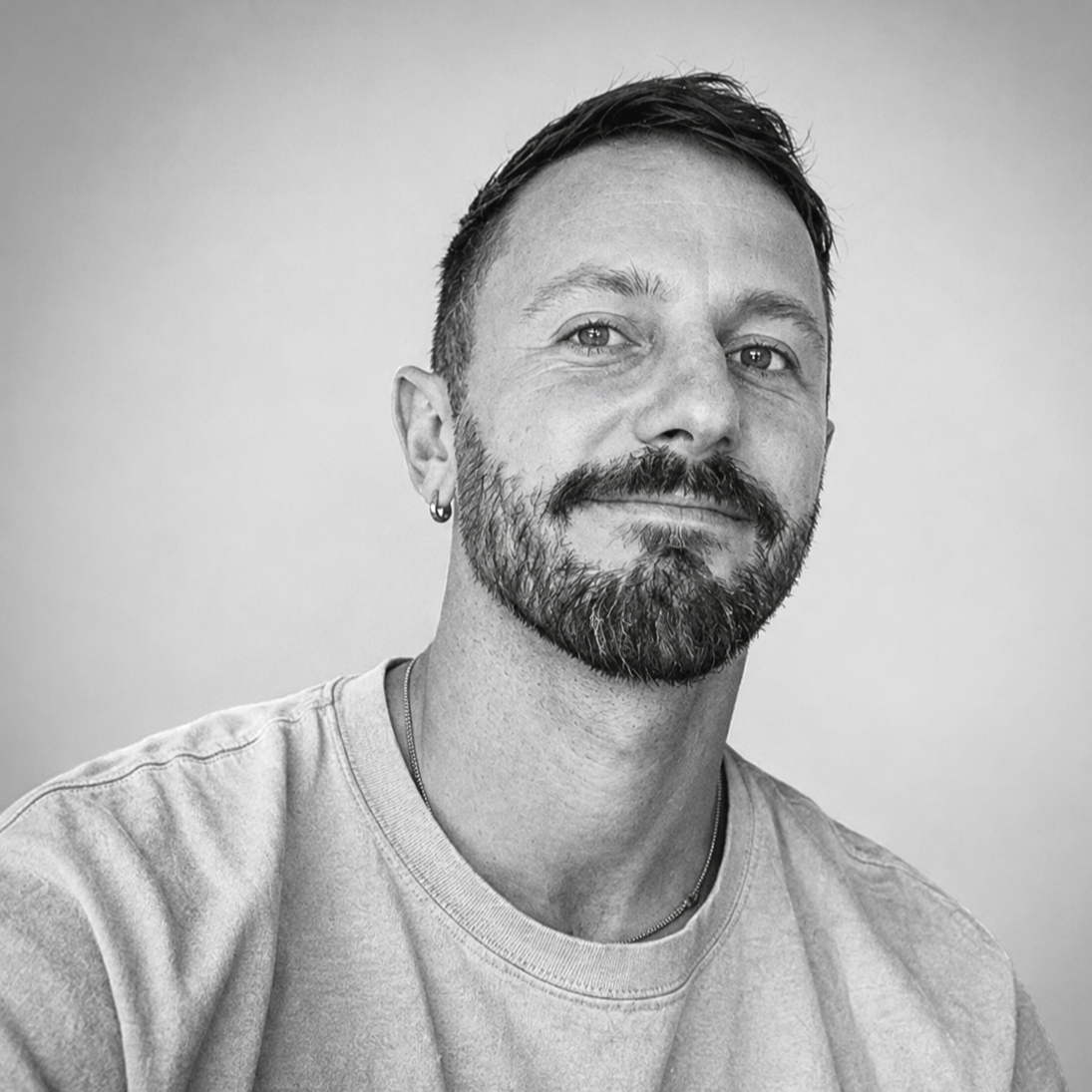
Nicolai Boas
Nicolai is a technique-focused teacher passionate about body awareness, anatomy, and mindful movement. With more than 15 years of teaching experience and education with in a number of different yoga and training forms his classes emphasize self-exploration, strength, and empowerment through practice.
Sarah Emilie
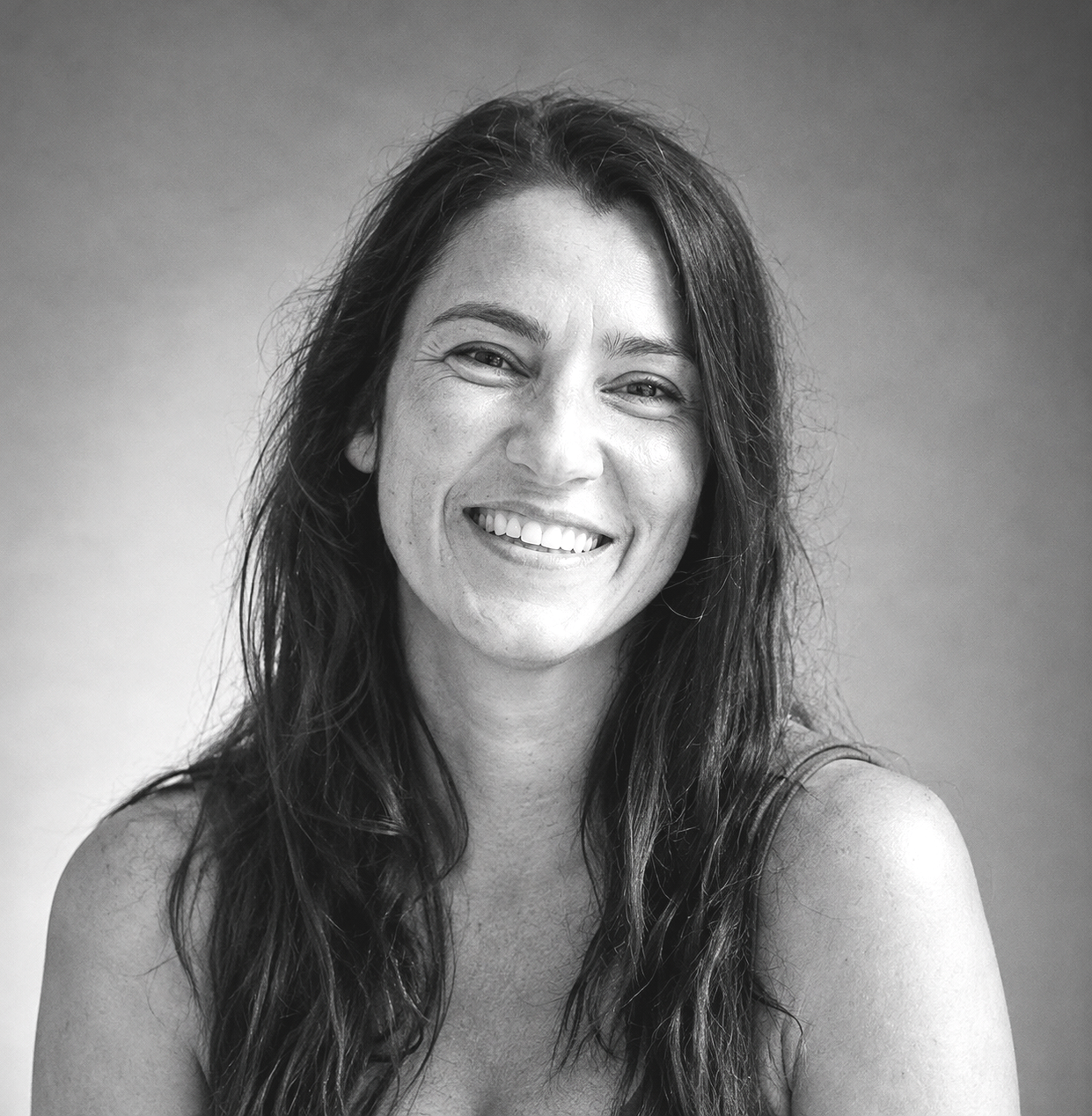
Sarah brings 16 years of breathwork practice and 10+ years of yoga teaching experience. She blends flow and alignment-based yoga with breathwork and meditation, guiding students through deep, transformative experiences.With many years of space holding on and of the mat, she inspires to bring fourth your authentic self.

Cédric Gorinas
With 10+ years of yoga teaching experience and a number and years of yoga practice and studies of the core philosophy of yoga, Cédric specializes in alignment-based yoga, meditation, and body-based psychotherapy. His classes integrate strength, flexibility, and body awareness to foster personal and spiritual growth.
Leah Wrobel
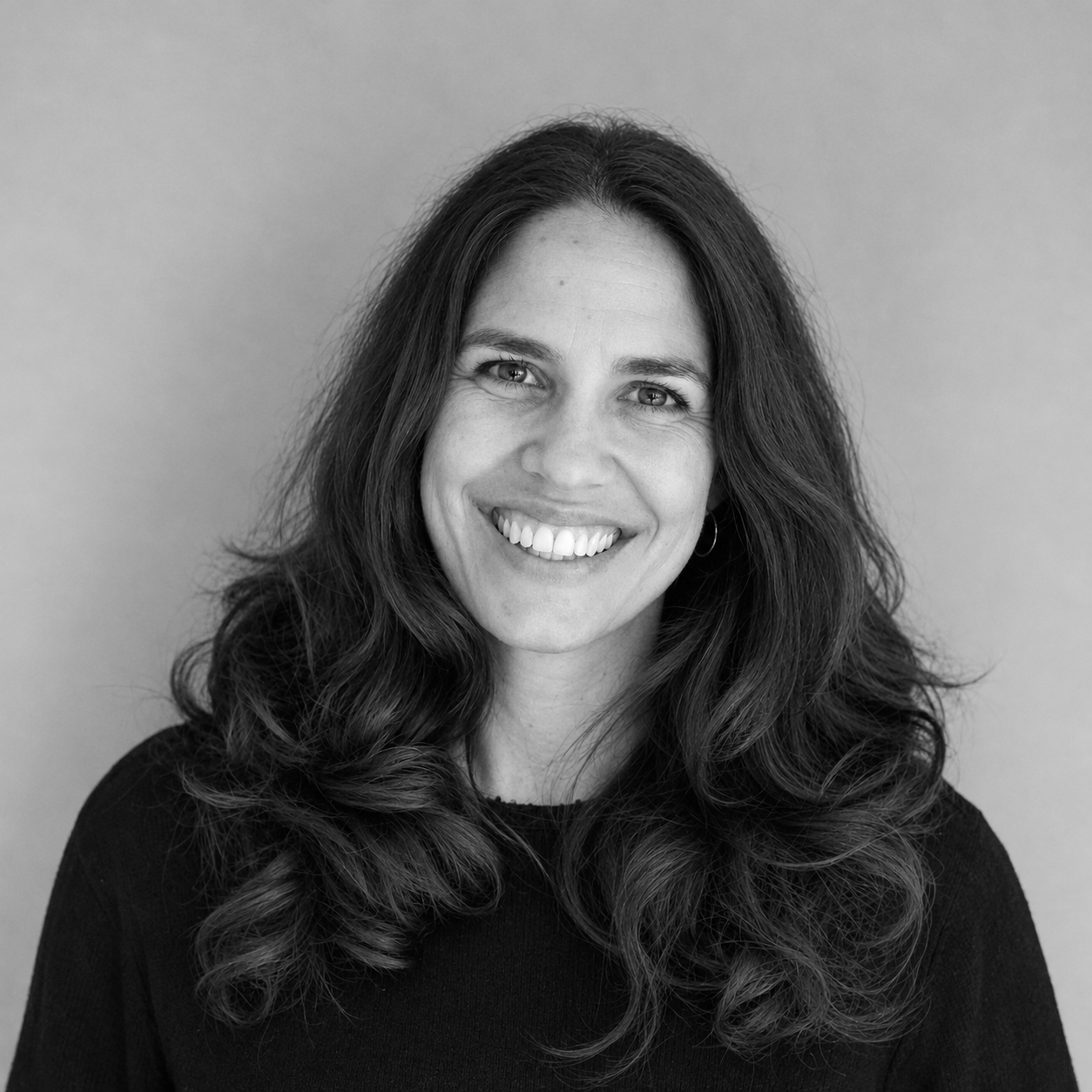
With 22+ years of teaching experience and a background in professional dance, yoga therapy, and religious studies, Leah specializes in pelvic floor health, trauma-informed yoga, and therapeutic approaches. Her teaching combines breath, movement, alignment, and body awareness to foster greater connection and presence.